
Playdough is more than just a fun material; it’s a powerhouse tool for Occupational Therapists in the school setting! Its malleable nature provides endless opportunities to target crucial fine motor skills, hand strengthening, and grasp development in an engaging, low-cost, and highly motivating way.
Whether you’re working on improving pencil grasp, building hand endurance, or refining finger isolation, playdough can be easily incorporated into individual sessions, small groups, or even classroom push-in activities.
Why Playdough is My Favorite and Should Be Yours Too:
- Versatile: Adaptable for a wide range of ages and skill levels.
- Engaging: Students love it, increasing motivation and participation.
- Tactile Input: Provides valuable sensory feedback for regulation and motor learning.
- Low Cost & Accessible: Easy to acquire and store in a school environment.
- Builds Hand Strength: The resistance of playdough is perfect for strengthening intrinsic hand muscles.

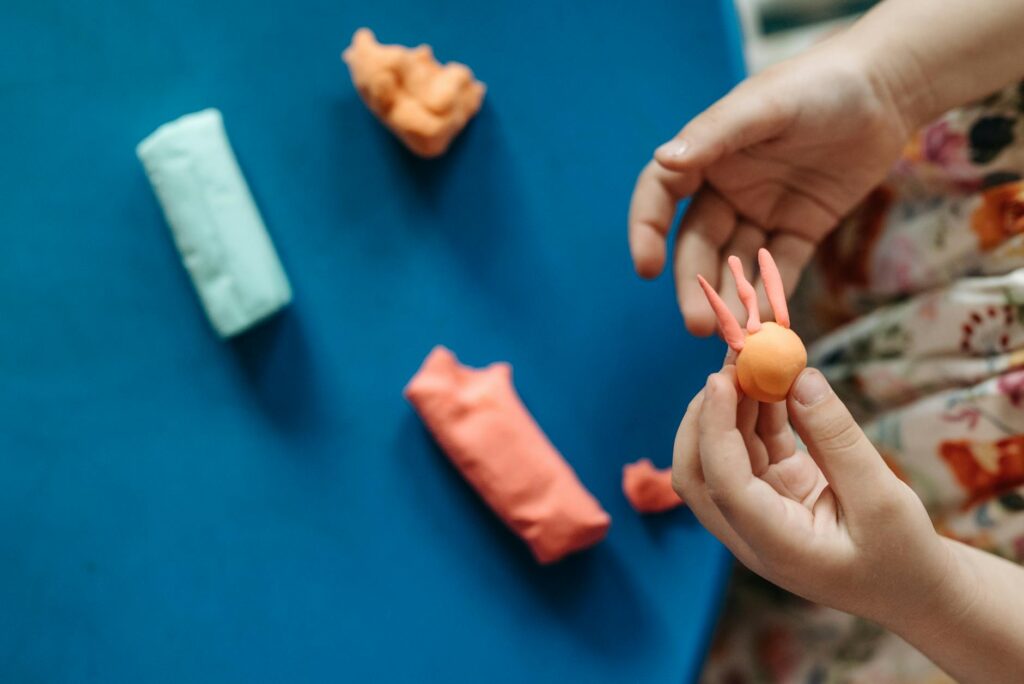
Playdough Activities for Grasp & Fine Motor Development:
Here’s a list of practical playdough activities, categorized by the specific fine motor skills they target:
1. Hand Strengthening & Bilateral Coordination
These activities are fantastic for building overall hand strength and encouraging the coordinated use of both hands.
- ” Squish”:
- Activity: Have the student roll a large ball of playdough and then use both hands, pressing down with their palms, to flatten it into a “pancake.” Encourage them to use their whole body weight.
- Targets: Bilateral coordination, heavy work, shoulder stability, general hand strengthening.
- “Snake Roll”:
- Activity: Guide the student to roll playdough into long “snakes” using both hands, pressing down and rolling back and forth on a flat surface.
- Targets: Bilateral coordination, sustained pressure, forearm rotation, hand strengthening.
- “Ball Squeeze”:
- Activity: Have the student squeeze a large chunk of playdough repeatedly with one hand, then the other, forming it into a tight ball.
- Targets: Gross grasp strength, hand endurance.
2. Pincer Grasp & Finger Isolation
These activities focus on developing the precise control of the thumb and index finger, essential for manipulating small objects and holding a pencil.
- “Pinch & Pick”:
- Activity: Hide small objects (e.g., beads, tiny erasers, dry beans) within a flattened playdough “pancake.” Have the student use a pincer grasp to “pinch” and “pick” out the hidden treasures.
- Targets: Pincer grasp, finger isolation (index and thumb), visual motor integration.
- “Worm Bites”:
- Activity: Roll thin playdough “worms.” Have the student use their thumb and index finger to “bite” off small pieces of the worm.
- Targets: Pincer grasp strength, finger isolation, graded control.
- “Bead Threading”:
- Activity: Have the student roll small playdough “balls” or “cylinders” and then use a toothpick or thin stick to poke a hole through the center. They can then “thread” these playdough beads onto a pipe cleaner or string.
- Targets: Pincer grasp, eye-hand coordination, bilateral coordination (holding the playdough while poking/threading).
3. In-Hand Manipulation
These activities help students move objects within their hand without needing to put them down or use their other hand.
- “Ball Roll”:
- Activity: Give the student a small piece of playdough. Have them roll it into a ball using only the fingertips and palm of one hand, without using the other hand or the table.
- Targets: Finger-to-palm translation, palm-to-finger translation, rotation within the hand.
- “Coin” Flatten”:
- Activity: Give the student small pieces of playdough. Have them use their thumb and fingertips to flatten the playdough into small “coins” or “buttons” using only one hand.
- Targets: Finger isolation, precise manipulation, graded force.
4. Pre-Writing & Letter Formation
Playdough can be a fantastic multi-sensory tool for practicing the foundational shapes and lines needed for handwriting.
- ” Letter/Shape Tracing”:
- Activity: Have the student roll thin playdough “snakes” and then form them into letters, numbers, or shapes (circles, squares, triangles). They can also trace pre-drawn letters on paper with playdough snakes.
- Targets: Visual motor integration, motor planning, bilateral coordination, fine motor precision.
- ” Letter Impression”:
- Activity: Provide letter stamps or small letter cookie cutters. Have the student press the stamps into flattened playdough to create letter impressions.
- Targets: Graded pressure, visual motor integration, letter recognition.
5. Scissor Skills (with Playdough)
Using playdough is a great way to build hand strength and practice scissor mechanics before transitioning to paper.
- “Playdough Snips”:
- Activity: Roll thin playdough “worms” or “snakes.” Have the student use child-safe scissors to make small “snips” along the length of the playdough.
- Targets: Scissor grasp, hand strength, bilateral coordination (holding playdough while cutting).
- “Playdough Log Cuts”:
- Activity: Roll thicker playdough “logs.” Have the student use scissors to cut the log into smaller “cookies” or “discs.”
- Targets: Increased hand strength, sustained cutting action, bilateral coordination.
Ready to Roll with Playdough?
Incorporating playdough into your school-based OT sessions is a fun, effective way to target a multitude of fine motor and grasp development goals. Remember to observe how your students are engaging with the playdough and adapt the activities to provide the “just right challenge.”
Looking for more structured activities and ways to track progress? Our Fine Motor Skills Developmental Checklist and Handwriting Worksheets can help you pinpoint specific areas of need and plan your next playdough adventure!