
As a School-based Occupational Therapist, I’ve seen firsthand how big feelings can completely ruin a child’s day. A moment of frustration over a failed block tower or a burst of anger after a disagreement with a friend can quickly escalate, leaving both kids and adults feeling helpless.
This is where the magic of a calm down corner comes in, but I also like calm down space. A lot of time people think calm dow corner is similar to timeout corner but trust me it is not. It’s not a time-out spot or a place for punishment. Instead, it’s a dedicated, safe space designed to teach children a powerful and lifelong skill: self-regulation. It gives them the tools and the space to navigate big emotions, calm their bodies, and reset their minds.
The “Why”: The Importance of a Designated Space
A calm down corner is effective because it provides a predictable routine and a controlled environment for a child to process overwhelming sensory input and emotions.
- It Teaches Emotional Literacy: By using visuals like a “Feelings Chart,” we give children the vocabulary to identify what they’re feeling, which is the first step toward managing it.
- It Provides Sensory Regulation: For many kids, big emotions are tied to their sensory systems being overstimulated or under-stimulated. A calm down space provides a place to safely get the sensory input they need—be it deep pressure from a weighted stuffed animal or visual calm from a glitter jar.
- It Empowers Them with Choice: Offering a child a menu of tools and strategies gives them autonomy. They learn that they can’t always control their feelings, but they can choose how to respond to them.
My Go-To Visuals for the Best Calm Down Corner
While a comfy beanbag and a quiet location are the usuals, the real power lies in the tools you provide. Here are some of my favorite FREE visuals I made that are easy to download and laminate for your own calm down space set up in your home, classroom, or therapy room.
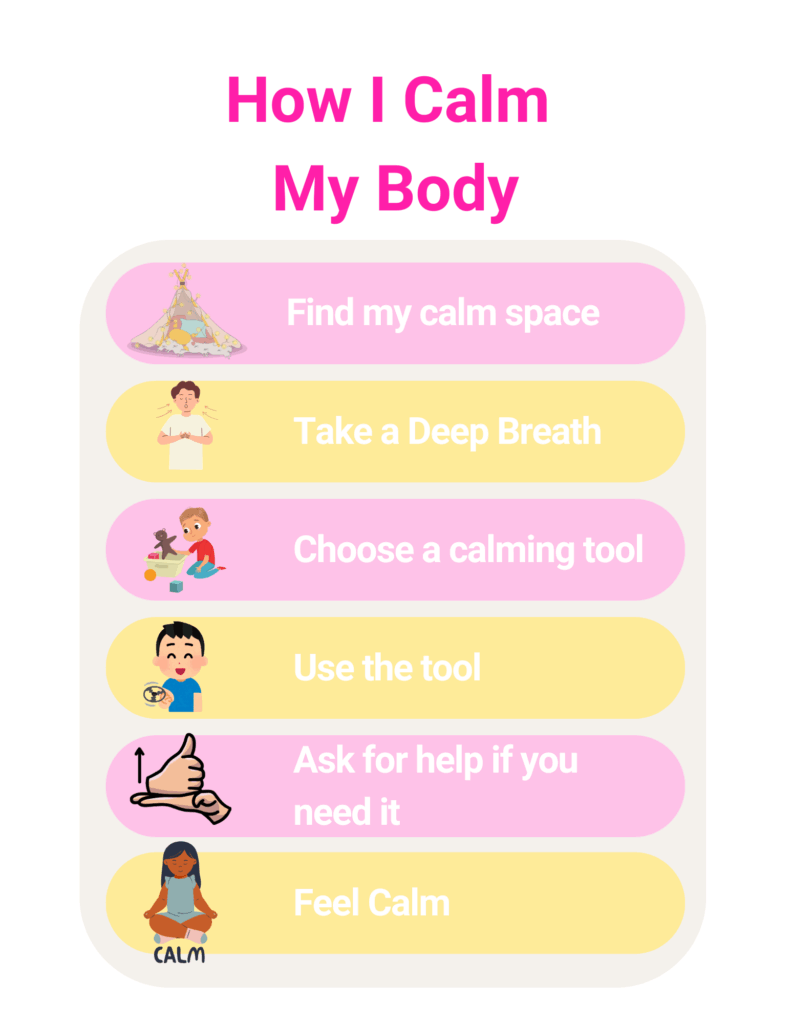
1. How I Calm My body Visual Schedule
A simple chart with pictures of different steps. This allows a child to walk themselves through the steps to using the calm down corner.
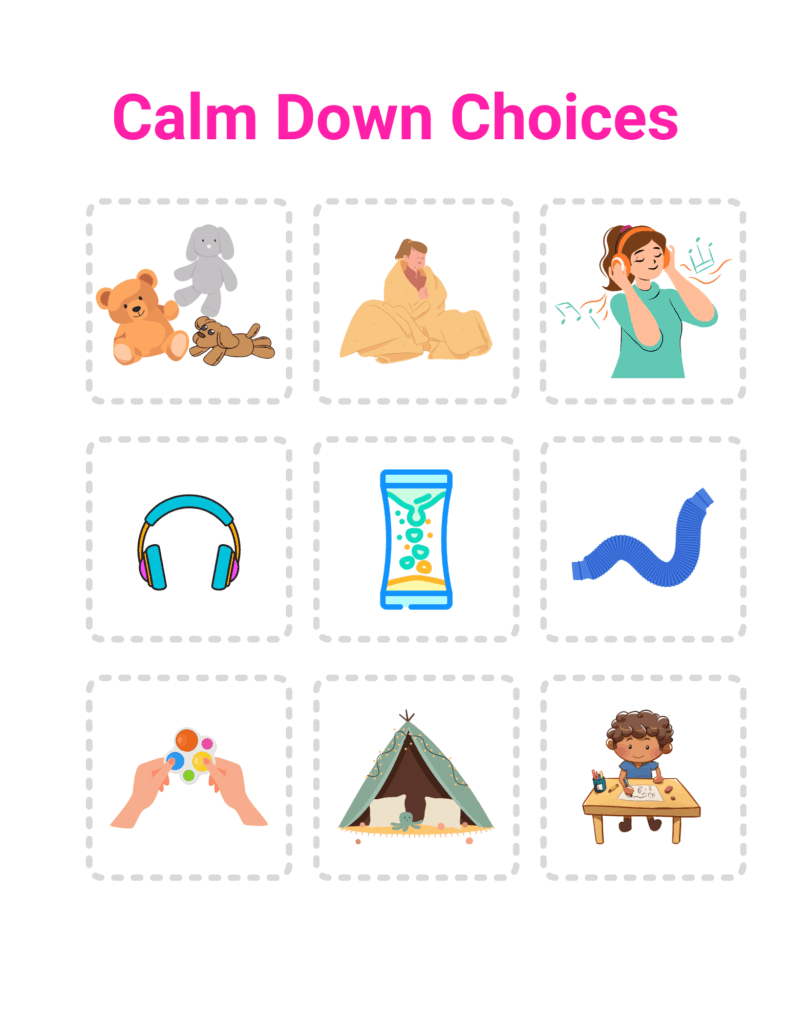
2. Calm Down Choices Cards
This is my favorite! A set of cards, each with a picture of a calming activity. When a child feels overwhelmed, they can flip through the cards and pick a strategy that feels right for them.
- Cards to include:
- A picture of a hand over a chest (“Take a deep breath”)
- A picture of hugs
- A picture of tent for quiet space
- A picture of a child reading
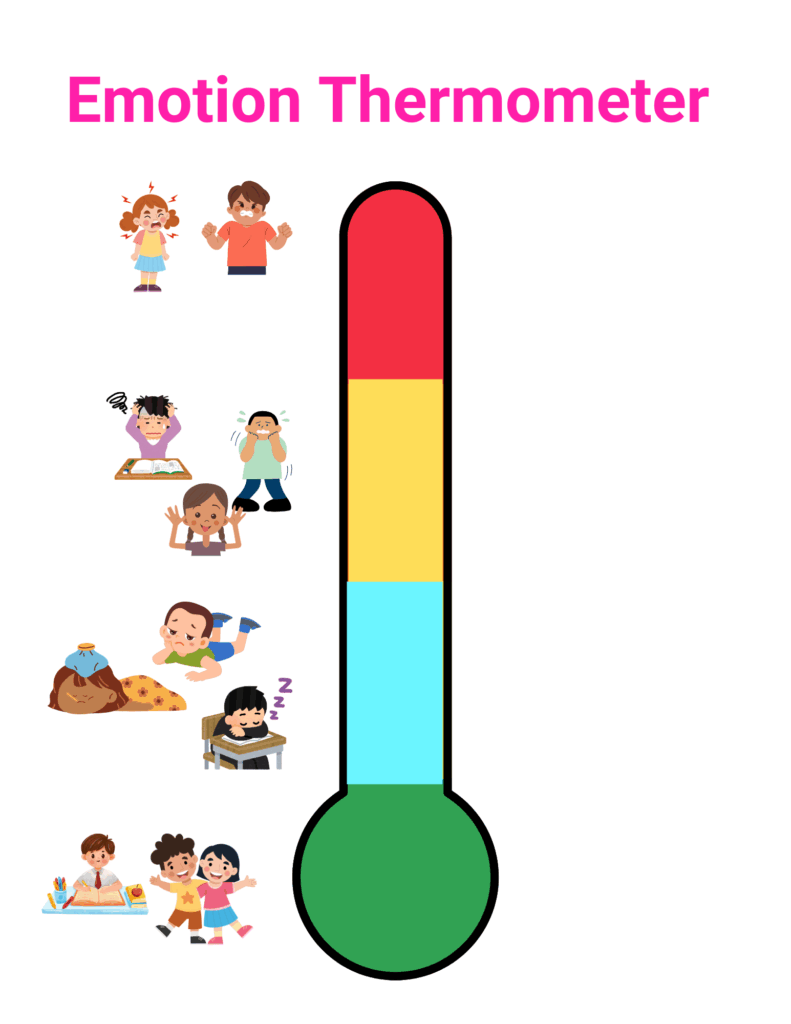
3. The Emotions Thermometer
This visual breaks down the child’s emotions into four simple colors, manageable steps. It’s perfect for self identification of feelings with a movable clothespin or clip.
- Green: Happy, Ready to learn
- Blue: Bored, Tired
- Yellow: Silly, Anxious, Worried
- Red: Mad, Yelling, Not ready to learn
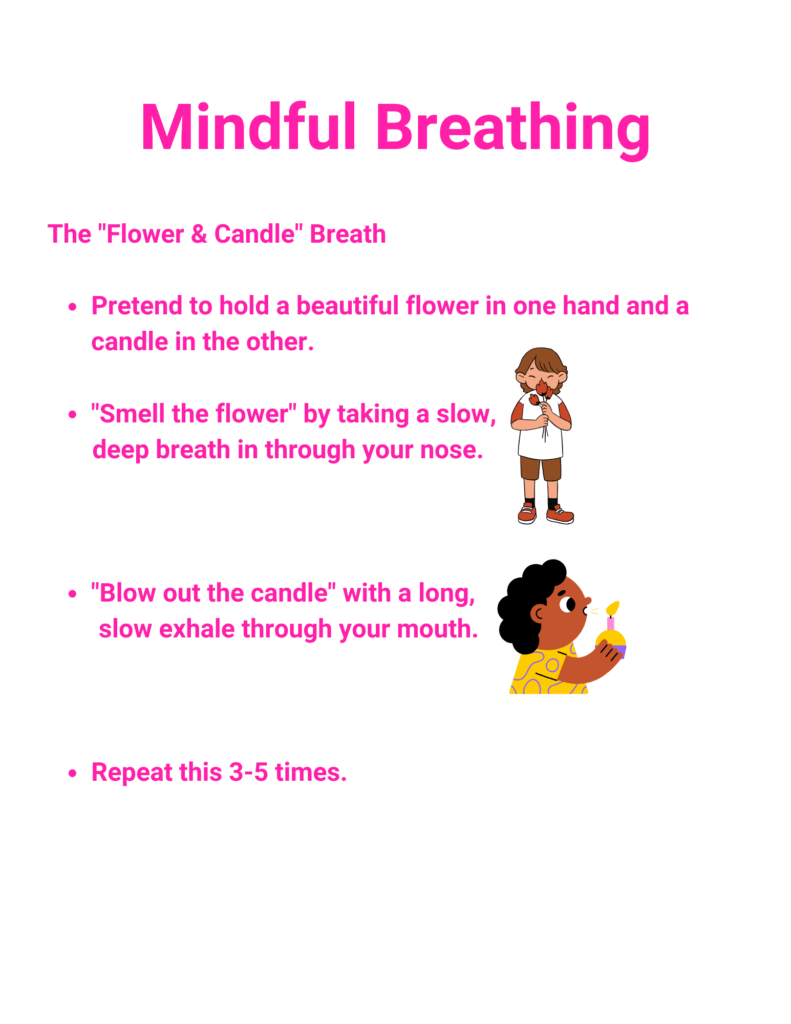
4. Mindful Breathing
A classic for a reason! The inhale to exhale patterns help children feel their inner calm.
- Flower and Candle Breath
- Star Breath
- Box Breathing
- Mindful Tracing
How to Get Started
Creating a calm down corner doesn’t have to be complicated. Start small and simple. Introduce the space and its tools to your child when they are already calm. Practice using the breathing exercises and sensory tools together so they know exactly what to do when they need it most.
By giving children a dedicated space to work through their big feelings, you’re not just calming them down in the moment—you’re building a foundation for emotional resilience that will last a lifetime.
Ready to help your students or kids find their calm? Take the guesswork out of setting up your corner with these easy-to-use visuals.